
Spain’s Youth Football System: Engineering the Future of the Game, Financially and Competitively, Worldwide
The reason why Spaniards are so good at football (soccer).

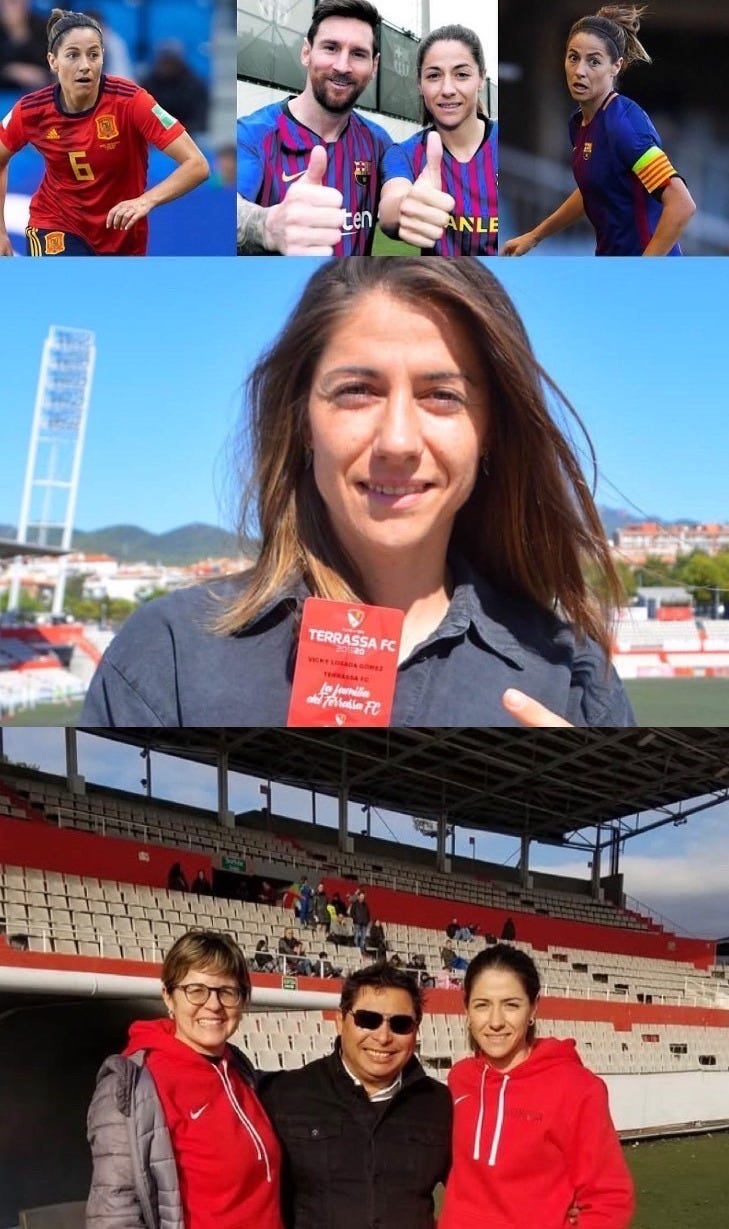
It’s June 24, 2019. I’m wearing a Spanish national team jersey, surrounded by a sea of red, white, and blue at a pub in Washington, DC. The US Women's National Team has just edged past Spain, 2–1, in the Round of 16 at the FIFA Women's World Cup in France. Megan Rapinoe converted both goals, each from the penalty spot.
One of my youngest staff members, a diehard USWNT fan, walked over with a smirk and said, “You guys just got your asses kicked. I mean literally…your friend got beat up.” She was referring to Vicky Losada, Spain’s captain, who’d taken a beating that day and left with a black eye. Losada has a special place in my heart. She came from Terrassa FC, one of my favorite clients during my years in sports management. After Terrassa FC, she became captain of FC Barcelona and made history in 2015 by scoring Spain’s first World Cup goal against Costa Rica.
But I digress.
“What I don’t understand,” she continued, “is why you’re smiling. Your team just lost. I mean, you’re American so technically we won, but you’re wearing the losers’ jersey. What’s with the joy?”
I told her I wasn’t interested in the result. I was thrilled because I had just seen the future. I watched the US struggle to win, not against seasoned women, but against up and coming women (over 56% of the team was 25 or younger). And I knew then: Spain is going to dominate women’s football for a very long time. Just like the men ( they had won the 2010 World Cup and 2012 European Championship by then).
A System Designed to Scale Excellence
Spain’s football development model is an engineered marvel: From U8 to U18, the youth system operates under promotion and relegation (just like the pros). Every match matters. Every point carries weight. There are no participation trophies, just structured growth, pressure, and the discipline to earn what’s next.
This model, once considered elite training for boys, now applies equally to girls. And that parity is the reason Spain didn’t just participate in the 2023 Women’s World Cup, they won it. With their B Team! -but that’s another story.- Their rise wasn’t sudden. It was built over decades of continuity, formalized learning, and systemic investment in youth development regardless of gender. Actual structural equity.
High-Level Summary of Spain’s Football Development System
Spain’s football ecosystem operates as a multi-tiered, federated pipeline that integrates club and national team development. At the grassroots level, local clubs and schools identify and cultivate early talent, feeding into city clubs; some amateur, others professional. These city clubs serve as feeders to regional professional clubs, which in turn connect to elite European teams through established scouting and transfer channels.
Parallel to the club system, the national team pathway follows a similar structural logic. Autonomous communities recruit top talent within their jurisdictions and channel players into inter-regional and national competitions. At this stage, national coaches evaluate and identify standout performers. Selection into national squads draws from both the club system’s promotion-relegation hierarchy and the national development framework.
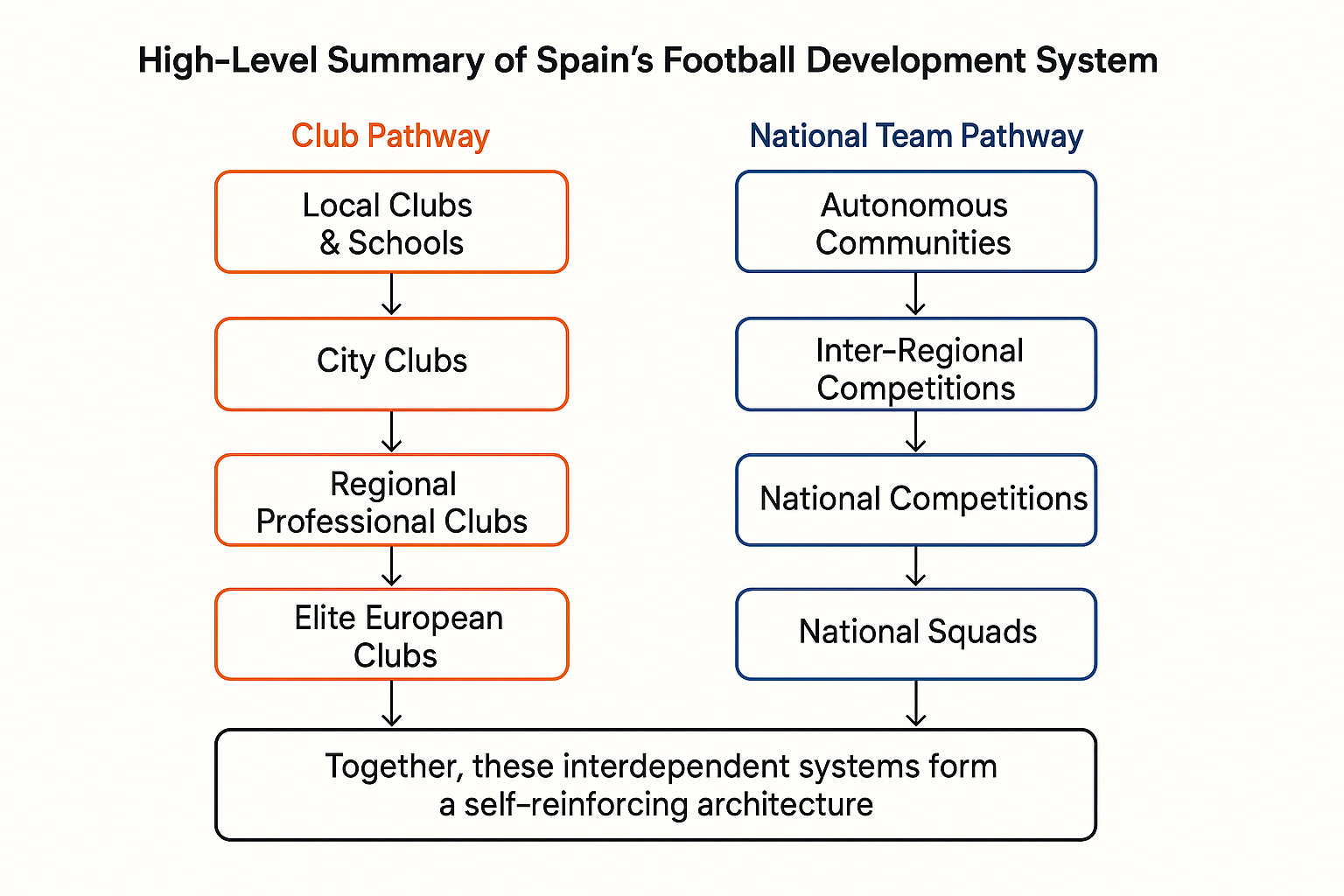
Together, these interdependent systems (club-driven advancement and regionally governed talent identification) form a self-reinforcing architecture that sustains Spain’s global competitiveness across all levels of the game.
Spain Didn’t Copy Greatness. It Manufactured It.
Spain didn’t reinvent football. It built the scaffolding for it to regenerate across generations, across genders, across contexts.
When Spain faced the USWNT in 2019, it was girls and up and comers versus legends. But those girls held their own. Four years later, they lifted the trophy. That’s the velocity of a well-designed system.
Every match in youth football is a test. Every league tier is a threshold. From playgrounds to academies, children -boys and girls- compete with consequence. The system doesn’t patronize. It teaches. And it produces not just athletes, but thinkers.
Spain manufactured golden generations instead of relying on them. Tiki-taka was taught with intent. And, when the game had to evolved beyond their signature style, the program adapted.
Infrastructure Meets Intention
In 2016, Iberdrola catalyzed their sponsorship elevated Liga Femenina from a peripheral league into a professional ecosystem with media coverage, commercial capital, and strategic storytelling.
They didn’t just back teams. They funded pipelines. And the effect was foundational. Players like Alexia Putellas didn’t rise by exception. They emerged from system.
Putellas, the first Spaniard to win both the Ballon d’Or and The Best, didn’t benefit from favoritism. She benefitted from structure. In 2022, she became the first woman to win the Ballon d’Or twice, not by chance, but by consequence.
Since then, Spain’s U17, U19, and U20 women’s squads have dominated Europe and the world. Liga F is now designated as professional. UEFA requires elite clubs to field women’s teams. La Liga clubs invest accordingly. What was once a side project is now a strategic imperative.
Consequence as Curriculum
Spain’s system rewards persistence over prestige. A player starts at a local club -maybe in Escuela UPP, Santes Creus, Sant Gabriel, or many of the hundreds of development school- earns visibility through performance, moves to a development academy, and eventually gets scouted. And scouting has evolved: today, Arsenal, Liverpool, and Manchester United send scouts to obscure Spanish towns, not because Spain is fashionable, but because it’s fundamental.
Location doesn’t determine opportunity. Performance does. The process is meritocratic. Just like Vicky Losada, Xavi Hernandez, and Dani Olmo (all originally from Terrassa FC), thousands of youth players all over Spain have access to the same development path. And that meritocracy builds more than skill, it builds autonomy, resilience, and pressure fluency.
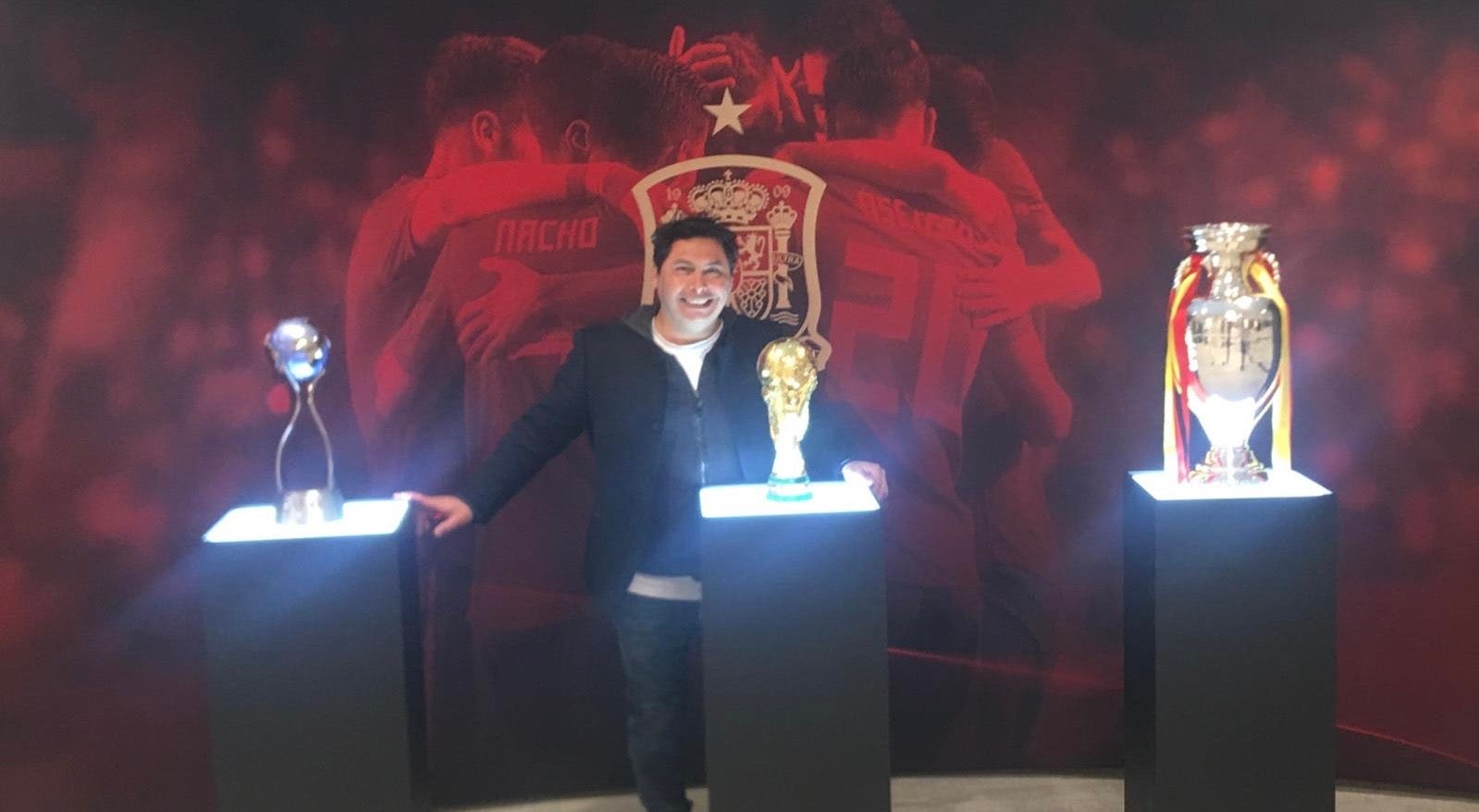
In Spain, football is formative. The game is woven into the structure of childhood, and crucially, the structure is shared. Boys and girls compete within the same framework, under the same stakes. The result is excellence.
From U8 to U18, young players face consequence-rich environments. They learn to self-regulate. They learn that advancement is earned. It’s not a simulation of professionalism; it is professionalism, scaled for youth. By the team they are U11, many of the players in top and second-tier teams have agents.
That rigor has produced elite male footballers for decades. But its impact on women’s football has been just as profound. Spain’s 2023 Women’s World Cup win wasn’t a breakthrough. It was the logical outcome of a system that never segmented ambition by gender.
Girls, like boys, begin with structure. They train with intention. They win with integrity.
From Every Local Club to World Dominance
Spain’s dominance on the men’s side was no accident. Euro 2008, 2012, 2024 and the 2010 World Cup in South Africa weren’t won by luck. They were won by structure. Academies like La Masia and Valdebebas didn’t just produce stars for elite leagues in Europe. Instead, they cultivated systems thinkers. The same developmental logic now applies to the women’s game.
Since Iberdrola’s investment, Liga F has gone from overlooked to overperforming. The Spanish government granted it professional status. Elite clubs integrated women’s programs as core assets. Professional contracts are now the norm. Development pipelines are intact. The result? Dominance at U17, U19, U20, and senior levels. It is now common culture to think, if you want to dominate the world in women’s football, you have to beat Spain.
Not a Surprise, A System
Spain’s women’s program is arguably now on par with the men’s, despite being decades younger. The wins aren’t flukes. They’re the yield of a deliberate system.
Spain men’s national team holds 10 major international titles including the 2010 FIFA World Cup, 4 UEFA Europa Championships, 2 Olympic gold medals, and a UEFA Nations League title. When people say Spain won the men’s World Cup in 2010, I say: No. The youth academies of Spain did.
And when I watched the USWNT struggle to beat Spain’s young players in 2019, I saw that same story unfolding again, across gender, across generations.
So when my staff asked why I smiled after Spain lost, I told them: “Because I just saw the future.”
Spain didn’t just catch up. It applied the same rigor to the women’s game. And now, across contexts and genders, the system is bearing fruit. Spain didn’t copy greatness. Instead it built the conditions for it to happen, again and again.
If you liked this piece, you may want to listen to:
Rethinking Football Podcast: S1E1 The Spanish Model, Why Are They So Good?!
References
AS. (2019, June 24). USWNT tops Spain in Women’s World Cup after controversial PK. AS Soccer. Retrieved August 3, 2025, from [https://en.as.com/en/2019/06/24/soccer/1561388847\_193168.html](https://en.as.com/en/2019/06/24/soccer/1561388847_193168.html)
Union of European Football Associations. (2024, December 17). Developing football in Spain. UEFA.com. https://www.uefa.com/nationalassociations/esp/
Real Federación Española de Fútbol. (n.d.). Real Federación Española de Fútbol. Retrieved August 3, 2025, from [https://www.rfef.es/](https://www.rfef.es/)
Transfermarkt. (n.d.). Spain – Youngest and oldest players appearing (Club ID 3375). Retrieved August 3, 2025, from [https://www.transfermarkt.us/spanien/juengsteaelteste/verein/3375/](https://www.transfermarkt.us/spanien/juengsteaelteste/verein/3375/)
UEFA. (n.d.). Primera División femenina (Liga F). In UEFA National Associations – Spain domestic league. Retrieved August 3, 2025, from [https://www.uefa.com/nationalassociations/esp/domestic/league/3053/](https://www.uefa.com/nationalassociations/esp/domestic/league/3053/)
Greyser, S. A., Cortsen, K., & Fuentes Fernández, J. (2023). LALIGA—From a soccer competition organizer to a global player in the sports and entertainment industry (Working Paper No. 24-009) \[PDF]. Harvard Business School. Retrieved August 3, 2025, from [https://www.hbs.edu/ris/Publication%20Files/24-009\_2c6ecf1b-a325-4101-8a04-a186b6dbdeca.pdf](https://www.hbs.edu/ris/Publication%20Files/24-009_2c6ecf1b-a325-4101-8a04-a186b6dbdeca.pdf)
LaLiga. (n.d.). ¿Qué es LALIGA? In Sala de prensa – LaLiga. Retrieved August 3, 2025, from [https://www.laliga.com/sala-de-prensa/que-es-laliga/](https://www.laliga.com/sala-de-prensa/que-es-laliga/)
U.S. Soccer. (2019, June 24). World Cup 2019 – USWNT vs. Spain: Match report, stats, standings & bracket. U.S. Soccer. Retrieved August 3, 2025, from [https://www.ussoccer.com/stories/2019/06/world-cup-2019-uswnt-vs-spain-match-report-stats-standings-bracket](https://www.ussoccer.com/stories/2019/06/world-cup-2019-uswnt-vs-spain-match-report-stats-standings-bracket)
FIFA. (2023, August 20). Documental | ¡Campeones! La Roja (2012) (José Luis López Linares) \[Video]. YouTube. Retrieved August 3, 2025, from [
FIFA. (2023, August 20). Los secretos de La Roja. Campeones del mundo | Documental \[Video]. YouTube. Retrieved August 3, 2025, from [
FOX Soccer. (n.d.). Losada gives Spain 1‑0 lead against Costa Rica \[Video]. YouTube. Retrieved August 3, 2025, from [
Futplan Sports, S.L. (n.d.). Vicky Losada Capitána. Retrieved August 3, 2025, from [https://futplan.com/vicky-losada-capitana/](https://futplan.com/vicky-losada-capitana/)